http://science.nasa.gov/headlines/y2009/29may_noaaprediction.htm
As you can see, the government clearly states that it could take ten years for a rec
 overy from such an event, so I wasn't exaggerating about what could happen. For me, it is actually quite scary to see this new solar prediction in print. Also in the article is a good graph that clearly illustrates the Maunder Minimum, a time when glaciers expanded and rivers in Europe froze over in what was called the Little Ice Age. I'm sure you've seen the artwork showing ice skaters on the Thames. Scientists still do not know why that happened, and this article and it's graphs make me wonder if we are headed for another 'Maunder Minimum' period, as Gaia struggles to to counter the warming. I think it would be nice to see cooler temperatures and more precipitation, but the longer winters, shorter growing seasons, and possible famine wouldn't be
fun.
Carbon-14 dating in tree rings have shown that there are other 'minima' in r
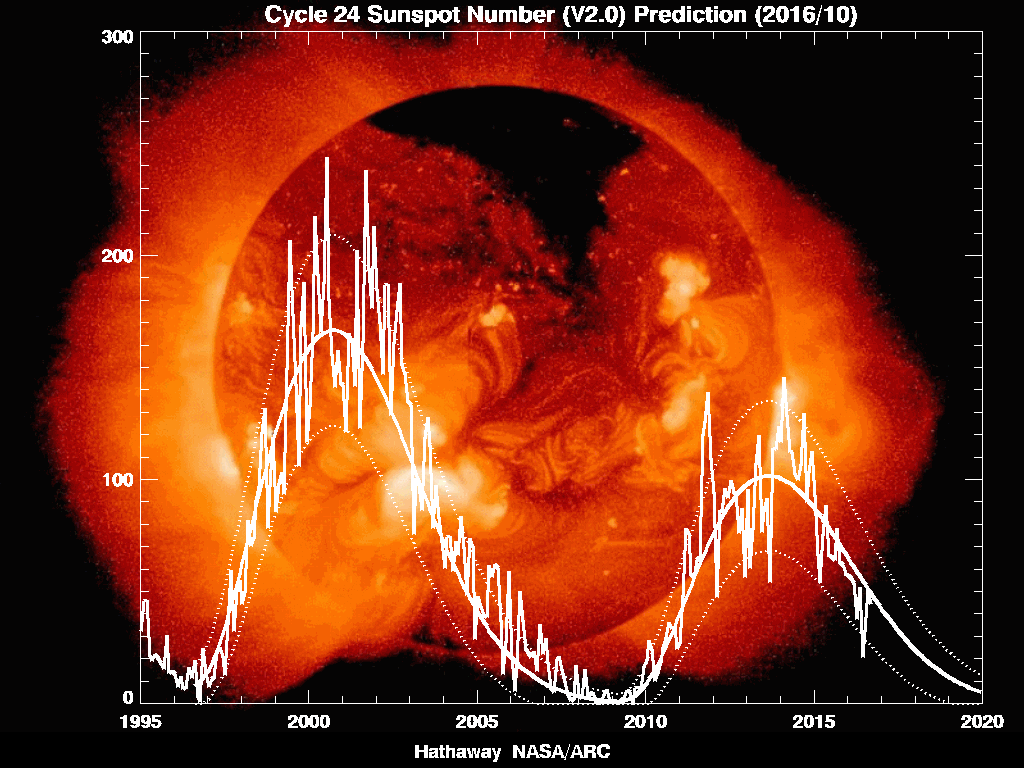 ecent history: Spörer Minimum (1450–1540)and Dalton Minimum (1790–1820). There has actually been 18 periods of sunspot minima in the last 8,000 years, and while some suggest that these periods are caused by a slowing of the sun's rotation, no one knows exactly why that would happen. It is interesting to think about. What we do know is that since 1996, the sun has been getting dimmer and the solar wind is 20% less than what it used to be. In the visible light spectrum, the sun is 0.02% dimmer, but in the ultraviolet spectrum, it is 6% dimmer. Referencing solar activity and sunspots, the sun is quieter now than it has been in the last 100 years. We are in what is referred to as a 'deep solar minimum'.


No comments:
Post a Comment